Book: The Hunger Games
Author: Suzanne Collins
Reader: Carolyn McCormick
Published: 2008
Source: Local Library
Time: 4:18:34
We were allowed to pick one audiobook as part of our 48HBC reading, so this is what I picked. I haven't read it since it first came out, and what with all the hoopla about the movie, I thought I'd go back and see what I thought. I started it this weekend, listened to it about one-third of the way through (while driving, cooking, knitting, etc) and stopped it just before the Games themselves started.
From a technical standpoint, this isn't the best-written book ever. Collins' prose can be downright clunky and infodumpy, with frequent diversions into flashbacks while big things are going on in the present. I wasn't a fan of McCormick's voices either (though she did do a killer Effie). The power of the book comes from two things: the sheer horror of the premise, and Katniss herself.
After so much exposure to the premise, from having read the book first and then the movie hype, you'd think I'd be used to it by now, but oh God. I'm so not. Children killing each other, and their families being forced not only to watch but also to treat it as entertainment? It's the nausea that keeps on giving. Every time I think I'm hardened to it, I run across something else that makes me goggle in horror. Mostly, this comes from the disconnect between the Capitol dwellers and the district Tributes, particularly those like Effie Trinket, Caesar Flickerman, and Katniss's design team, who make their living from these games. They see these kids year after year, up close and personal as they shine them up for the unforgiving eye of the camera, then see them die, and the next year they do it all over again. The next year they are able to do it all over again. That's a special kind of soullessness.
I've heard people complain about Katniss. She's self-involved,
off-putting in her determined self-sufficiency. She doesn't change, doesn't grow. In fact, I think she's so complex to
start with that a fair amount of the book is taken up with simply getting to know her, even though we're in her head.
Everyone tries to make her into something, with limited
success. My favorite example of this is when Haymitch is trying to prep
her for her interview, trying on different personae like coats, and
finally gives up in disgust. When she's told to be honest, her interview is a semi-successful blend of sparkling girl and ferocious warrior, but in truth she's not wholly either.
She tries to be hard and uncaring. In fact, when I was
listening to the first chapter, I was amazed at how brittle she came
across. But then you see the flashes of the girl underneath, the tender
heart protected by a thick hedge of thorns. Katniss is as tough as she
is on the outside because she's so vulnerable underneath. Perhaps due to her awareness of this, she reacts with fury and horror at any suggestion that she might be weak or in need of help (in fact, at the suggestion that she might have any stereotypically feminine traits, which is probably a subject for an entire Gender Studies thesis).
As a revolutionary, Katniss is a total disaster. She doesn't care about changing the world. She's worried about staying in it. It's other people that ignite her sense of the tremendous unfairness of it all. Or more accurately, her sense that something can be done, because she's known from the start that the world is unfair. As it happens, it's Gale and Peeta who jointly effect this change. Don't tell the "teams," but these two boys are far more similar, both as individual characters and in their relationships with Katniss, then they'd like to admit.
No, she's not a comfortable person to spend an entire book with. In fact, there are times when she's downright smackable. But whether she's being tough or impulsive or sad or nasty or simply shooting herself in the foot, she's definitely interesting, and definitely someone you want to spend a book with, comfortable or not.
Showing posts with label musings. Show all posts
Monday, June 11, 2012
Saturday, April 14, 2012
Post-Apocalyptic Double Feature: Nomansland by Lesley Hauge and After the Snow by S.D. Crockett
Book: Nomansland
Author: Leslie Hague
Published: 2010
Source: Purchased
They spend their lives in training, constantly preparing against the enemy that could destroy their peaceful society. They're told the dangers of being soft, of being unprepared. If they succumb to the enemy, their lives will be taken from them and they will be subject to torture, rape, and the loss of their own will. They must be ever-vigilant against the enemy.
Men.
But one girl has discovered a secret treasure trove of items from before, when girls were soft and weak. Intoxicated by this mysterious new world, a small group of girls spends hours and hours exploring things like makeup, high heels, and soft beds. But the leaders of their society have a vested interest in keeping them away from these things, and it can't last forever.
I feel as if this was the first half of a book, and we were supposed to get a second half where the narrator, Keller, who has already started to tentatively explore the idea that men may not be entirely awful, gets proof first-hand. Unfortunately, she's mostly an onlooker to a corrupt society, brutally punishing an outlier, and this weakens the power of the book for me. I never felt as if I got beyond stereotypes in any character. The single exception, oddly enough, was Dayna, who never truly appears except through the treasure trove of her bedroom. With makeup next to soccer trophies, stuffed animals and posters of dreamboats, this super-typical teenage girl, long-dead, defies stereotypes in a way that the girls of Foundland never quite achieve.The premise was intriguing, but it needed stronger characterization and a more powerful story to really make it shine.
Book: After the Snow
Author: S.D. Crockett
Published: March 27, 2012
Source: Review Copy from publisher via NetGalley
His family has disappeared, taken away by the government men, and Willo is on his own in an icy, snowbound landscape. He knows his job--first, to survive, the way he's always been taught. Second, to find them.
The voice reminded me strongly of Blood Red Road, one of my favorites from last year. The dialect may drive people crazy, but I got used to it, and followed Willo through the frozen wasteland that is his world, into the grinding poverty of a broken city and the secrets of his family.
We never really meet the family, and that may be the source of my biggest complaint against this book. With no particular attachment to them, I never felt any sense of urgency for Willo to find his family, and honestly it didn't seem as if he did either. Granted, this is a kid who talks a lot tougher and more detached than his actions show, and maybe we're supposed to parse out his love for his family between the lines. But I think if we'd seen even one scene with them, as opposed to scattered memories, it would have lent his quest a lot more urgency. As it is, Willo seems to drift through the book, and I often had to remind myself of what his purpose was and why I was reading. A promising voice, but it needed more substantive world building and character development for me to get excited.
* * *
So why is this a double feature? And why, as underwhelmed as I was, am I talking about them at all? Because I read these books virtually back-to-back, and noticed the same thing about both of them. I was waiting for something that never came . . . specifically, the Big Lurve Story. Willo encounters some girls/women but never really falls in WUV! (Thank God, because one girl is thirteen, another is a sociopath, and the third gets killed messily.) Keller, for her part, doesn't have first-hand contact with the male of the species until the very last page, and it's hardly in a situation to promote the swoonage.
We're so used to having a love story in a dystopia these days that fans and media lend it far more importance that it really merits in the story. See: the Hunger Games. While I like the love story, it's not even close to what the whole thing is about, and I cringe for Suzanne Collins whenever I see something like "The Hotties of the Hunger Games!" Of course, hotties are an easier sell than revolution.
While I had problems with both these books, the lack of a love story was not one of them and it's something that made them both stand out for me. YA authors, don't put in a love story unless it's there.
Author: Leslie Hague
Published: 2010
Source: Purchased
They spend their lives in training, constantly preparing against the enemy that could destroy their peaceful society. They're told the dangers of being soft, of being unprepared. If they succumb to the enemy, their lives will be taken from them and they will be subject to torture, rape, and the loss of their own will. They must be ever-vigilant against the enemy.
Men.
But one girl has discovered a secret treasure trove of items from before, when girls were soft and weak. Intoxicated by this mysterious new world, a small group of girls spends hours and hours exploring things like makeup, high heels, and soft beds. But the leaders of their society have a vested interest in keeping them away from these things, and it can't last forever.
I feel as if this was the first half of a book, and we were supposed to get a second half where the narrator, Keller, who has already started to tentatively explore the idea that men may not be entirely awful, gets proof first-hand. Unfortunately, she's mostly an onlooker to a corrupt society, brutally punishing an outlier, and this weakens the power of the book for me. I never felt as if I got beyond stereotypes in any character. The single exception, oddly enough, was Dayna, who never truly appears except through the treasure trove of her bedroom. With makeup next to soccer trophies, stuffed animals and posters of dreamboats, this super-typical teenage girl, long-dead, defies stereotypes in a way that the girls of Foundland never quite achieve.The premise was intriguing, but it needed stronger characterization and a more powerful story to really make it shine.
Book: After the SnowAuthor: S.D. Crockett
Published: March 27, 2012
Source: Review Copy from publisher via NetGalley
His family has disappeared, taken away by the government men, and Willo is on his own in an icy, snowbound landscape. He knows his job--first, to survive, the way he's always been taught. Second, to find them.
The voice reminded me strongly of Blood Red Road, one of my favorites from last year. The dialect may drive people crazy, but I got used to it, and followed Willo through the frozen wasteland that is his world, into the grinding poverty of a broken city and the secrets of his family.
We never really meet the family, and that may be the source of my biggest complaint against this book. With no particular attachment to them, I never felt any sense of urgency for Willo to find his family, and honestly it didn't seem as if he did either. Granted, this is a kid who talks a lot tougher and more detached than his actions show, and maybe we're supposed to parse out his love for his family between the lines. But I think if we'd seen even one scene with them, as opposed to scattered memories, it would have lent his quest a lot more urgency. As it is, Willo seems to drift through the book, and I often had to remind myself of what his purpose was and why I was reading. A promising voice, but it needed more substantive world building and character development for me to get excited.
* * *
So why is this a double feature? And why, as underwhelmed as I was, am I talking about them at all? Because I read these books virtually back-to-back, and noticed the same thing about both of them. I was waiting for something that never came . . . specifically, the Big Lurve Story. Willo encounters some girls/women but never really falls in WUV! (Thank God, because one girl is thirteen, another is a sociopath, and the third gets killed messily.) Keller, for her part, doesn't have first-hand contact with the male of the species until the very last page, and it's hardly in a situation to promote the swoonage.
We're so used to having a love story in a dystopia these days that fans and media lend it far more importance that it really merits in the story. See: the Hunger Games. While I like the love story, it's not even close to what the whole thing is about, and I cringe for Suzanne Collins whenever I see something like "The Hotties of the Hunger Games!" Of course, hotties are an easier sell than revolution.
While I had problems with both these books, the lack of a love story was not one of them and it's something that made them both stand out for me. YA authors, don't put in a love story unless it's there.
Saturday, January 21, 2012
Censorship and Mexican-American Studies in Tucson
I generally don’t talk about current events or politics on this blog. I’m pretty content to yak on about books and awards given to books and sometimes information about movies made from books. Narrow but deep, that’s my focus.
But something happening in my immediate vicinity has been making national news. The word has gone out that the largest school district in Tucson has been banning books related to the Mexican-American Studies program, which it's in the process of removing from high schools. Read TUSD's statement in reaction to their sudden notoriety. Bonus: it includes the list of books to be removed.
Banning is actually an inaccurate depiction of the situation. They're being removed from the former MAS classrooms, but they're available at the school libraries and, oddly enough, in other social studies classrooms that were not MAS studies classes. Mind, I'm not saying that's not censorship. It's just not the full-on book-burning that is being portrayed nationally.
This is my hometown, one I love very much, warts and all. This is about censorship, which as a librarian strikes at one of my core values. This is about ethnicity and pride, which as a Latina woman and proud to be so, is also one of my core values. (To those who have met me: yes. I am. We come in all shades, you know.) And finally, this is about our kids and teens and what they’re learning, what they’re permitted to learn, what identity they are forming for themselves and what identity is being formed for them, which as someone who loves kids’ and YA literature, is something I’m thinking about all the time.
This is about more than books, although as always, the books are an easy target. They're physical objects which can be removed from a curriculum, but as in all censorship cases these objects represent ideas. Removing the books is an attempt to control the uncontrollable. Here's what Arizona is trying to control, and why a simple change of venue for a few books is just the tip of a particularly vicious iceberg.
As a result of a state law, the board of the Tucson Unified School District recently voted to end the Mexican-American studies classes at local high schools. This is not just a school district cutting out a class or two. This is a school board surgically excising an entire curriculum that seeks to study the history and culture of Mexico, the United States, Mexican-Americans, and how our countries interact up to the present day.
The state law in question is Arizona House Bill 2281, specifically the following passage.
Basically, what they're saying is that by choosing to study the culture and history of a country other than America, teachers are creating a seething mass of future revolutionaries instead of educating our young people on a history and culture that's going to have an enormous effect on the world they stand to inherit and ultimately, run. By the way, my understanding is that this program was not limited to those of Mexican-American origin, but rather open to any TUSD student who wanted to sign up. Somebody please correct me if I'm wrong on that.
Understand: I am not placing all the blame onto the TUSD board. They're doing their best to comply with state law, which is, y'know, the law. My ire is aimed more at the lawmakers who wrote HB2281 in the first place.
What lawmakers forget (or want everyone else to forget) is that Arizona wasn’t part of the United States until the Gadsden Purchase. We just barely became a state in 1912. In our 100th year of statehood, we are effectively denying that Mexico and its people ever had any important effect on our town, on our state, and on our country. Which is bullshit.
I’ll say that again.
Bullshit.
We are a border state and have been for generations, the border gliding back and forth across the mountains and the desert. Tucson has existed under no fewer than four flags in our 236 years (yep, that number is correct) of existence as a city.
And yet, we are being forced to deny our very nature as a border town by denying any views of history and literature other than the standardized, mainstream America one.
You know what these kids are hearing? “You (or your friends or your neighbors) are not worth studying.”
“Your (their) background is not as good as our background.”
“You (they) are controversial. We don’t want to talk about you (them). When we talk about you (them), people get resentful. We don’t want that.”
“So stop talking.”
“It’s better for you (them) to lose your heritage, lose pride in your history, then for us to face that this is a border town in a border state and that we’re marbled through with all different colors. We don’t want all those colors. They’re untidy. They make messes.”
This is about more than Mexican-Americans, though. Tucson has refugees from countries all over the world. In my library, I can hear a veritable Tower of Babel in one hour at the desk. If Mexican-American studies are deemed illegal and controversial, then what about kids from Nepal? From Somalia? From Vietnam? Believe me, they're all in my library, all struggling to make sense of themselves, their backgrounds, their old country, and their new. Consider what does it do to your heart when your new country says, basically, "Forget about your old country. It doesn't matter to real Americans."
They hear: You don't matter. If you want to be a real American, you have to forget who you were.
That's not my ideal of America. But today, that's the reality in my Arizona.
But something happening in my immediate vicinity has been making national news. The word has gone out that the largest school district in Tucson has been banning books related to the Mexican-American Studies program, which it's in the process of removing from high schools. Read TUSD's statement in reaction to their sudden notoriety. Bonus: it includes the list of books to be removed.
Banning is actually an inaccurate depiction of the situation. They're being removed from the former MAS classrooms, but they're available at the school libraries and, oddly enough, in other social studies classrooms that were not MAS studies classes. Mind, I'm not saying that's not censorship. It's just not the full-on book-burning that is being portrayed nationally.
This is my hometown, one I love very much, warts and all. This is about censorship, which as a librarian strikes at one of my core values. This is about ethnicity and pride, which as a Latina woman and proud to be so, is also one of my core values. (To those who have met me: yes. I am. We come in all shades, you know.) And finally, this is about our kids and teens and what they’re learning, what they’re permitted to learn, what identity they are forming for themselves and what identity is being formed for them, which as someone who loves kids’ and YA literature, is something I’m thinking about all the time.
This is about more than books, although as always, the books are an easy target. They're physical objects which can be removed from a curriculum, but as in all censorship cases these objects represent ideas. Removing the books is an attempt to control the uncontrollable. Here's what Arizona is trying to control, and why a simple change of venue for a few books is just the tip of a particularly vicious iceberg.
As a result of a state law, the board of the Tucson Unified School District recently voted to end the Mexican-American studies classes at local high schools. This is not just a school district cutting out a class or two. This is a school board surgically excising an entire curriculum that seeks to study the history and culture of Mexico, the United States, Mexican-Americans, and how our countries interact up to the present day.
The state law in question is Arizona House Bill 2281, specifically the following passage.
A. A SCHOOL DISTRICT OR CHARTER SCHOOL IN THIS STATE SHALL NOT INCLUDE IN ITS PROGRAM OF INSTRUCTION ANY COURSES OR CLASSES THAT INCLUDE ANY OF THE FOLLOWING:(Sorry for the caps, guys. That's the way it's printed on the bill.) For those more thorough-minded, here's the full text at the Arizona Legislature's website. And read also Janni Lee Simner's much more cogent post, On Tucson's Ethnic Studies program, and a little on Arizona politics. (ETA: Holy crud, even the New York Times has thrown in an editorial.)
1. PROMOTE THE OVERTHROW OF THE UNITED STATES GOVERNMENT.
2. PROMOTE RESENTMENT TOWARD A RACE OR CLASS OF PEOPLE.
3. ARE DESIGNED PRIMARILY FOR PUPILS OF A PARTICULAR ETHNIC GROUP.
4. ADVOCATE ETHNIC SOLIDARITY INSTEAD OF THE TREATMENT OF PUPILS AS INDIVIDUALS.
Basically, what they're saying is that by choosing to study the culture and history of a country other than America, teachers are creating a seething mass of future revolutionaries instead of educating our young people on a history and culture that's going to have an enormous effect on the world they stand to inherit and ultimately, run. By the way, my understanding is that this program was not limited to those of Mexican-American origin, but rather open to any TUSD student who wanted to sign up. Somebody please correct me if I'm wrong on that.
Understand: I am not placing all the blame onto the TUSD board. They're doing their best to comply with state law, which is, y'know, the law. My ire is aimed more at the lawmakers who wrote HB2281 in the first place.
What lawmakers forget (or want everyone else to forget) is that Arizona wasn’t part of the United States until the Gadsden Purchase. We just barely became a state in 1912. In our 100th year of statehood, we are effectively denying that Mexico and its people ever had any important effect on our town, on our state, and on our country. Which is bullshit.
I’ll say that again.
Bullshit.
We are a border state and have been for generations, the border gliding back and forth across the mountains and the desert. Tucson has existed under no fewer than four flags in our 236 years (yep, that number is correct) of existence as a city.
And yet, we are being forced to deny our very nature as a border town by denying any views of history and literature other than the standardized, mainstream America one.
You know what these kids are hearing? “You (or your friends or your neighbors) are not worth studying.”
“Your (their) background is not as good as our background.”
“You (they) are controversial. We don’t want to talk about you (them). When we talk about you (them), people get resentful. We don’t want that.”
“So stop talking.”
“It’s better for you (them) to lose your heritage, lose pride in your history, then for us to face that this is a border town in a border state and that we’re marbled through with all different colors. We don’t want all those colors. They’re untidy. They make messes.”
This is about more than Mexican-Americans, though. Tucson has refugees from countries all over the world. In my library, I can hear a veritable Tower of Babel in one hour at the desk. If Mexican-American studies are deemed illegal and controversial, then what about kids from Nepal? From Somalia? From Vietnam? Believe me, they're all in my library, all struggling to make sense of themselves, their backgrounds, their old country, and their new. Consider what does it do to your heart when your new country says, basically, "Forget about your old country. It doesn't matter to real Americans."
They hear: You don't matter. If you want to be a real American, you have to forget who you were.
That's not my ideal of America. But today, that's the reality in my Arizona.
Wednesday, January 04, 2012
What Would Katniss Read?
So I was catching up on my blog reading (yeah, I'm still back in December somewhere, so what?) and I ran across the new Hunger Games ALA READ poster over at Waking Brain Cells. And I went, "Oh! The pretty! The leather! The tough faces!" and enjoyed my fangirlish little self.
Then I thought, "Why don't any of them have a book in their hands? The poster says READ. What are they supposed to read? The word READ?" Honestly, I think they missed a prime opportunity to have the shiny hardbacks of each book in the series, prominent in their hands.
Okay, I realize they're on the poster as characters from a book, and I should be happy with that. When am I ever happy? (Don't answer.) Probably District 12 doesn't have any books, except a precious few that survived. And Katniss and Gale, at least, are probably too tough and practical to do anything so unproductive as reading.
But Peeta, at least, strikes me as a reader. I picture him cleaning off the flour and sugar at the end of the day and reading, like, the complete works of Charles Dickens. He'd identify with the hardscrabble life of Oliver Twist or Nicholas Nickleby, and also the luscious descriptions of food in The Pickwick Papers.
Then I started to speculate on which book exactly each of these characters would read, if books were available in sufficient numbers. Yes, these are the kind of thoughts that occupy my mind. Join me in speculation. If you were the District 12 librarian, what would you have hidden under the desk, waiting for Katniss, Gale, or Peeta to come in?
Then I thought, "Why don't any of them have a book in their hands? The poster says READ. What are they supposed to read? The word READ?" Honestly, I think they missed a prime opportunity to have the shiny hardbacks of each book in the series, prominent in their hands.
Okay, I realize they're on the poster as characters from a book, and I should be happy with that. When am I ever happy? (Don't answer.) Probably District 12 doesn't have any books, except a precious few that survived. And Katniss and Gale, at least, are probably too tough and practical to do anything so unproductive as reading.
But Peeta, at least, strikes me as a reader. I picture him cleaning off the flour and sugar at the end of the day and reading, like, the complete works of Charles Dickens. He'd identify with the hardscrabble life of Oliver Twist or Nicholas Nickleby, and also the luscious descriptions of food in The Pickwick Papers.
Then I started to speculate on which book exactly each of these characters would read, if books were available in sufficient numbers. Yes, these are the kind of thoughts that occupy my mind. Join me in speculation. If you were the District 12 librarian, what would you have hidden under the desk, waiting for Katniss, Gale, or Peeta to come in?
Tuesday, October 18, 2011
Not just for Gardens
I recently weeded my to-be-read list. Weeding is something librarians do every so often to keep the collection fresh and new so the good stuff actually circulates. Weeding motto: “Nobody actually needs a book on the space program from 1968.” (Oh-ho-ho. You think I jest. I really did weed this very book from the collection at my first library. It had been a long time since they’d discarded anything.)I’m a bit of a packrat by nature (she says from under the massive stacks of books and yarn), and I’ve started to apply weeding principles to my everyday life. If you don’t wear it/use it/even remember why you own it anymore, it’s time for it to go.
I decided to apply this to my TBR list. It was famously (because I wouldn't shut up about it) around 1400 items long, and I was reading books that I’d added to it close to two years ago. All of this wasn’t so bad, except I was doing more plowing than reading, just getting through this book so I could get to some of the good stuff further down the list. The list should be made up of good stuff, I decided.
So I got drastic. Using LibraryThing’s collections option, I tossed everything into a collection called “Weeding” and then went through it, looking for stuff that made me go, “Oh, but I WANT to read that!”
Any book I recognized right away, remembered the premise, and remembered who had recommended it to me got saved. Any book by auto-read authors like Sarah Dessen, Elizabeth Scott, Philip Reeve, Scott Westerfeld, etc, got saved. Anything else, I just left in the weeding collection. The few things where the title, the cover looked promising or I vaguely remembered a little about it, I studied and hemmed and hawed and clicked through to Amazon to read the premise and a few of the professional reviews. And you know what? About half the time, I left it in the weeding collection. Some of them were very good books, I’m sure, but it wasn’t something that I particularly wanted to devote several hours of my life to. I know about it, and from a professional standpoint, that’s enough.
I did one pass through my list. This took several days, during snatched moments in the middle of other things. Then a second pass, slower, more focused, and with no distractions, to catch the things that I might have missed the first time. There weren’t many. Then I gritted my teeth, screwed up my courage, and deleted everything that was left.
In all, I cut my list down by 572 books. I discarded trendy books that fell off the radar two days after publication. I discarded Very Weighty Tomes that won Very Weighty Awards, very nice for them I’m sure but I just don’t wanna read it. I discarded books whose inclusion on my reading list made me wonder what I’d been smoking.
A huge amount were picture books. I don’t feel so bad about that, because as the children’s librarian, I see every picture book that comes in, and I keep a stack of the more interesting ones at my desk for when I have the time to read them. (I hear that derisive laughter from the ALSC committee. It happens. Sometimes.)
I look at my list now and it looks like a list of books I actually want to read. Which is really the whole point.
How often do you weed your piles or your reading list?
Monday, September 27, 2010
Right Book, Wrong Time
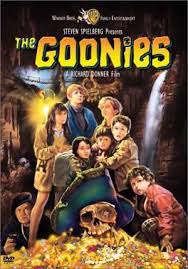
I have a confession to make. I didn't like "The Goonies."The first time I ever saw it, I was twenty and went with a friend to a Free Campus Movie Nite. She was well-nigh swooning at the thought of seeing this marvelous movie from her childhood, assuring me that I would love it. I was surrounded by people who were all in a fever of joy at the thought of this apparently defining moment in their cinematic experience, and let me tell you, it's quite something to see a frat boy enraptured by non-Hobbitized Sean Astin. Me? I kept waiting for the marvelousness to start.
When it ended, she turned to me and said, "Well? Wasn't it great?"
"Um. It was okay." I watched her face fall and quickly added, "I would have loved it when I was ten! Seriously!"
I said that mostly to keep her from trying to explain to me how awesome it was. But the more I consume stories, especially stories written for a different demographic than my own, the more that thought has come back to me. "Oh man, I would have loved this when I was (insert age here)."
For instance--and if you need to pretend you never knew me after reading this, I understand--if Twilight had come out when I was fourteen, I would have eaten it up, sparkly vampire and all. Oh, I might have recognized the flaws. But I would have loved it so hard. I would have written fanfiction and worn "Edward" t-shirts and had passionate, hour-long discussions about whether he was right not to have vamped Bella the first time she asked for it. (And yes, if you noticed, I would have been Team Edward. What can I say?)
But I wasn't fourteen, I was twenty-five, and I read Twilight with an "Okay, well, I guess I see the appeal but I'm not really feelin' it." (My withering disdain for Bella Swan didn't really get off the ground until New Moon, with the empty pages after Edward dumped her. Good god, girl. The first month I understand, maybe. Somewhere before the fourth, you should go get a makeover and jump the hot werewolf.)
There's a feeling that Art is great or not-great on its own merits--that the people who love it or hate it, depending on the opinion of the learned elite, are totally wrong-headed. But that leaves out the other half of the equation, the reader, and all they bring to the book. It's a particular consideration for those of us who love kid's and teen books. We're not the target audience, so when we review a book, we have to think about two things: 1) What did I think of it? 2) What would a kid think of it?
This is not saying that all children's or YA lit has a sell-by date, or even that the sell-by date is the same for everybody. I'm still nutty about Harry Potter, and I know there are people older than me who know every word, backward and forward, of Twilight. Clearly it's still saying something to somebody. But I'm not the same person I was at fourteen (thank God!), so it makes sense to me that a book could simply miss its target. The trick is in understanding when that target might have been in my life, and using that knowledge when I write about it.
Thursday, February 18, 2010
Doormat McLoser, I am Unfriending You
Meet Doormat McLoser. She (or, more rarely, he) is a perfectly nice person, with many fine qualities, often including intelligence, compassion, and a devotion to a less-than-mainstream pastime, like the school newspaper, drama club, stamp collecting or playing the ukelele with her teeth. Unfortunately, she (or he) is also Unpopular. Oh, the angst of being Unpopular. Oh, the horror of sitting at the lunch table slightly closer to the garbage cans. Oh, the pain of being ignored in the hallways by all the People Who Matter. How she ever bear it?
She cannot! She will not! She will become Popular any way she can, no matter who she has to trample on or what she has to give up. It's all in the cause of Popularity!
To do this, she must befriend Glittery LaBeautiful. Everyone looooves Glittery LaBeautiful. She (or sometimes he) is rich, tall, thin (except for her C-cups), blond goddess who has perfect teeth, is a shoo-in for the valedictorian, and was accepted at an Ivy League school as an eighth-grader. She runs the school. Nothing is done without Glittery's say-so. She picks everything from the lunch menu to the spring musical. Ergo, the road to Popularity lies in Glittery's stiletto-heeled footsteps.
Unfortunately, Glittery isn't very nice. In fact, Glittery is a sociopath whose methods would make Hitler sit down with a notepad and pencil, and all her little cabal isn't much better. But Popularity is more important than self-respect, so Doormat will perform whatever wacky and degrading hijinks Glittery dreams up.
Eventually, the line is crossed, and Doormat discovers that her old friends (Awkward Dorkman and Nerdy Geekington III) are her True Friends, and that's all she needs. Oh, and remember Dreamy Boy Doormat Never Noticed Because He Was Just Too Geeky For Her? (You know he's there too, often if not always one of the True Friends.) Now that she thinks about it, Dreamy Boy is sooooo much cuter than the godlike quarterback she dated for about thirty seconds. Luckily for Doormat, Dreamy's just cuckoo for her Cocoa Puffs.
Then it's time for hugs, smoochies, and a vicious takedown of Glittery that utilizes all of Doormat and the True Friends' arcane skill set. That taken care of, everyone rides off into graduation and the glow of acquired self-respect and Glittery's humiliation. The End.
I can't take it any more.
I realize that popularity is a preoccupation bordering on obsession with many teenagers. I understand that in realistic YA fiction, this storyline is a trope bordering on a subgenre. I'm just sayin', I'm over it. No more. Please, God, no more.
I want to scream at Doormat. "For Chrissake, have some self-respect." I want to kick the True Friends for taking her back after she dumped them like the cafeteria's tuna-fish sandwich. I want to decapitate the Dreamy Boy who may actually have less self-respect than Doormat. Barring decapitation, I want him just once to say, "Yeah, I did like you, but now I'm snogging this smart, confident girl over here who has never once felt the need to dress up like an ear of corn and swim in a vat of tomato sauce at the senior prom. Buh-bye!"
The only one I have no loathing for is Glittery LaBeautiful. Because sociopath she may be, but by God, she owns it.
There are excellent books with this storyline. But all too often it's the same tired stuff masquerading as wacky hijinx and deeply felt lessons on self-respect, and I'm done. I'll look at the covers, I'll shelve the books, and I'll put them on display when called for. But as the Internet is my witness, I'm never reading one of them again.
This was going to be a tweet. Then it evolved into a Facebook status update (more characters, dontcha know.) Then, as I thought about it, I realized that my rage was too huge to contain in anything less than a full blog post. If you've made it this far, I commend you. Now if you'll excuse me, I'm off to weed my TBR list.
She cannot! She will not! She will become Popular any way she can, no matter who she has to trample on or what she has to give up. It's all in the cause of Popularity!
To do this, she must befriend Glittery LaBeautiful. Everyone looooves Glittery LaBeautiful. She (or sometimes he) is rich, tall, thin (except for her C-cups), blond goddess who has perfect teeth, is a shoo-in for the valedictorian, and was accepted at an Ivy League school as an eighth-grader. She runs the school. Nothing is done without Glittery's say-so. She picks everything from the lunch menu to the spring musical. Ergo, the road to Popularity lies in Glittery's stiletto-heeled footsteps.
Unfortunately, Glittery isn't very nice. In fact, Glittery is a sociopath whose methods would make Hitler sit down with a notepad and pencil, and all her little cabal isn't much better. But Popularity is more important than self-respect, so Doormat will perform whatever wacky and degrading hijinks Glittery dreams up.
Eventually, the line is crossed, and Doormat discovers that her old friends (Awkward Dorkman and Nerdy Geekington III) are her True Friends, and that's all she needs. Oh, and remember Dreamy Boy Doormat Never Noticed Because He Was Just Too Geeky For Her? (You know he's there too, often if not always one of the True Friends.) Now that she thinks about it, Dreamy Boy is sooooo much cuter than the godlike quarterback she dated for about thirty seconds. Luckily for Doormat, Dreamy's just cuckoo for her Cocoa Puffs.
Then it's time for hugs, smoochies, and a vicious takedown of Glittery that utilizes all of Doormat and the True Friends' arcane skill set. That taken care of, everyone rides off into graduation and the glow of acquired self-respect and Glittery's humiliation. The End.
I can't take it any more.
I realize that popularity is a preoccupation bordering on obsession with many teenagers. I understand that in realistic YA fiction, this storyline is a trope bordering on a subgenre. I'm just sayin', I'm over it. No more. Please, God, no more.
I want to scream at Doormat. "For Chrissake, have some self-respect." I want to kick the True Friends for taking her back after she dumped them like the cafeteria's tuna-fish sandwich. I want to decapitate the Dreamy Boy who may actually have less self-respect than Doormat. Barring decapitation, I want him just once to say, "Yeah, I did like you, but now I'm snogging this smart, confident girl over here who has never once felt the need to dress up like an ear of corn and swim in a vat of tomato sauce at the senior prom. Buh-bye!"
The only one I have no loathing for is Glittery LaBeautiful. Because sociopath she may be, but by God, she owns it.
There are excellent books with this storyline. But all too often it's the same tired stuff masquerading as wacky hijinx and deeply felt lessons on self-respect, and I'm done. I'll look at the covers, I'll shelve the books, and I'll put them on display when called for. But as the Internet is my witness, I'm never reading one of them again.
This was going to be a tweet. Then it evolved into a Facebook status update (more characters, dontcha know.) Then, as I thought about it, I realized that my rage was too huge to contain in anything less than a full blog post. If you've made it this far, I commend you. Now if you'll excuse me, I'm off to weed my TBR list.
Sunday, December 27, 2009
New Year's Blog Resolutions
Okay, New Year's Day isn't until Friday. But I thought I'd get these out there now. Lately, my life has been just a little insane, and my blogs are two things I pushed to the back burner. I have no problem with that--for a little bit, other things took precedence. But now I want to get back to blogging, and also to improve some things about my own blogging experience.Resolutions work better when you set a specific goal, so I'll include one.
This year, I resolve to:
Comment more
I know people love getting comments, and there are varying schools of thought on their value. Speaking for myself, I like commenting and getting comments because it feels like I'm deeper into this awesomely fun conversation we've all been having for, oh, the last four years or so. I hear murmurings of a comment challenge in January. Maybe this will be the kick in the pants I need. I resolve to leave at least 5 comments a week. At the moment, that's 5 more than I am doing.
Post more
Like I said, I haven't been blogging much lately. That's been life-related, but it would be too easy to let that non-blogging habit continue. I resolve to post at least twice a week on both blogs. My next resolution should help with that.
Review more
My policy is not to review a book unless it has That Thing. That special spark that makes me go, "Ooooh, this is something I want to talk about." All very well and good, but I've been skipping books I wanted to review but just didn't. MotherReader's 48-Hour Reading Challenge in June taught me that I can write a review in twenty minutes or so, and even the blathery ones don't take more than half an hour to 45 minutes, including links and images. Surely I can carve out half an hour each week to write a review of a book I want to talk about anyway. I resolve to post one review a week on either blog, and preferably on both.
Not sweat the small stuff
Okay, this one might seem contradictory, given all those great intentions I have up there. But I do tend to overfocus and obsess a little, even if it's in the privacy of my own mind. So this is the year I'm going to relax and not chew on things like statistics. I've always done this for me first, and I want to stop grizzling because So-and-So has more followers than I do. Or whether I've read that hot book everyone's talking about. I'll get to it. If it's that great, it'll still be that great in ten months or whenever. No goal for this one, because I can't really say, "I resolve to not freak out at least once a week."
So that's my plan for 2010. What are your New Year's Blog Resolutions?
Monday, November 23, 2009
Series Questions
So I've been cogitating on series lately. The reason for this cogitation (which should only be attempted by a trained professional, with spotters) is that I'm reading the second-latest in a long-running series that I won't name because really the question is not about that series, it's about series qua series, and I've descended into pretentious Latin that I may not in fact be using correctly, oh god, help me.*slap!*
Ahem. I promise, no more sentences like that.
So what kicked off all this babbling was that I started the book and went, "Oh, more of this stuff." And then I went, "Uhoh." Because the main character is genuinely a lot of fun and spunky to the max and all that, but I was like, "Really, kid? Again? Do you ever learn? Like, ever?"
I've noticed this with other series, too, especially the ones that get up to about four or five books with no end in sight. I'd argue (and some may argue with me) that the Harry Potter series actually escaped this. Yeah, there was a certain formula. Important elements always included Voldemort, DADA teacher, infirmary visits (god, that kid got banged up), Ron and Hermione, Dumbledore, and often Quidditch. It was a Harry Potter book, so you knew all this was going to happen. But Rowling kept raising the stakes and Harry kept encountering situations and choices that pushed him out of his comfort zone, and ours. Can you imagine first-year Harry doing what seventh-year Harry did? Not me.
It may be the Harry Potter thing, it may be the Will of the Almighty Dollar, but series seem to be longer-running than ever lately. And they're thick books. It's not just the Magic Treehouse model anymore, a whole row of 100-pagers that you can skip through. What this means is that, more than ever, I'm getting the Oh This Again feeling. I'm a completist, so it takes quite a bit to stop me reading the rest of the series, but I'm starting to re-think that.
At what point does a series lose the pull, that Oooh, What's S/He Going to Do Now and become More of the Same? What has an author done that has pulled it out for you?
Monday, November 16, 2009
Reviewers, Amateur and Otherwise
A few weeks back, Betsy Bird posted a piece at Fuse #8 about the Amazon VINE program, which offers free books to members in return for reviews. She discussed certain things that unsettled her about the program, the titles were offered to participants, and the reviews generated. A lot of people who are part of the program stopped by and weighed in.
Now, Amazon VINE and similar programs are being discussed on other blogs. I'll leave that to them. Myself, I wanted to take note of a certain tone that seemed to run through the comments.
One of Betsy's initial concerns was about--well, let her say it.
So what are professional standards? I'll guess that they mean reviews like you find in the New York Times, or Kirkus, or any other number of publications that compensate their reviewers. (Even at print journals, not all reviewers are paid in cold hard direct deposits, which was one of the things swirling around the FTC stuff last month.) You generally expect--nay, demand--that these reviews are fair and balanced. Sometimes they're analytical on a story level, sometimes they make considered recommendations of appropriate audience.
But in all cases, they step back from the book. Whether or not they're getting paid in money, books, or even the thrill of having their name in print, they're writing their review from a different position than somebody just reacting to the book.
This argument about professional standards gets at something that the kidlitosphere chews on every so often. We do this for the love of it, and we do this as ourselves. I'm not writing for Kirkus in exchange for $$, I'm writing for Confessions of a Bibliovore . . . just 'cuz. Do independence and volunteer basis give us carte blanche to write one-line reviews? Of course not. Because we do this for the love of it, and we know people read our blogs, we try to step back just as the professionals do, and produce thoughtful, balanced reviews that aren't knee-jerk first reactions. We all have our own style--I'll be the first to admit that my weird jokes wouldn't make it in Kirkus, for instance. But there's a wide spectrum of quality between review journals and "This book sucked, don't buy it. Love, me."
So much for bloggers. What about Viners, or LibraryThing Early Reviewers, or any of the other programs out there? As the name posits, they are early reviewers. They're the first ones to dole out the rating, and the ones who are most likely to influence what other people think. No, they're not getting paid, except in the chance to read a book for free before everybody else. But their position of being the first reviewers, and ones who are highlighted when others decide whether to read the book or not, should affect the review. Not positively or negatively, but the style. Why did you hate it? Why did you love it? Why did you want to whack that girl upside the head with the Clue Bat?
In the interest of transparency, I should note that I'm part of the LibraryThing Early Reviews program, through which I get about one book a month. I'm not the best at reviewing those and usually only post them at LT. Having written this post, I'm feeling kind of guilty about that and resolving to do better.
I want to add that I'm not trying to bash on Viners or LT Early Reviewers, or anything like that. It's difficult to write a review, even for a book you loved (or hated!) It's work. While I hear that Viners are experienced Amazon reviewers, it still takes a lot of time and thought to do a well-rounded review, and it's probably tempting to jot down the first thoughts in order to fulfill the requirements of the program. But I also think that people should be aware not only of their own opinions, but of the audience that will be reading their reviews and the context in which they will be read.
Finally I'd like to say that, no, nobody gets paid for blogging or early reviewing. At best we get free books, which are more of an experience than an object. But--cereal boxes and sporting gear endorsements aside--the only thing that Olympians get is a trip to a different country, and maybe a lump of metal on a ribbon.
Now, Amazon VINE and similar programs are being discussed on other blogs. I'll leave that to them. Myself, I wanted to take note of a certain tone that seemed to run through the comments.
One of Betsy's initial concerns was about--well, let her say it.
You see, on the children's literature side of things, the people submitting reviews are often getting products for kids that require a subtle hand. And when they find that the book they're reading isn't Goodnight Moon Redux, they can get negative. Not critically constructive. Not helpful in their feedback about what does and does not work. Just mad.This I agree with, and I took note of the response, which boiled down to: "We're (or they're) not professionals. You shouldn't hold us (them) to professional standards."
So what are professional standards? I'll guess that they mean reviews like you find in the New York Times, or Kirkus, or any other number of publications that compensate their reviewers. (Even at print journals, not all reviewers are paid in cold hard direct deposits, which was one of the things swirling around the FTC stuff last month.) You generally expect--nay, demand--that these reviews are fair and balanced. Sometimes they're analytical on a story level, sometimes they make considered recommendations of appropriate audience.
But in all cases, they step back from the book. Whether or not they're getting paid in money, books, or even the thrill of having their name in print, they're writing their review from a different position than somebody just reacting to the book.
This argument about professional standards gets at something that the kidlitosphere chews on every so often. We do this for the love of it, and we do this as ourselves. I'm not writing for Kirkus in exchange for $$, I'm writing for Confessions of a Bibliovore . . . just 'cuz. Do independence and volunteer basis give us carte blanche to write one-line reviews? Of course not. Because we do this for the love of it, and we know people read our blogs, we try to step back just as the professionals do, and produce thoughtful, balanced reviews that aren't knee-jerk first reactions. We all have our own style--I'll be the first to admit that my weird jokes wouldn't make it in Kirkus, for instance. But there's a wide spectrum of quality between review journals and "This book sucked, don't buy it. Love, me."
So much for bloggers. What about Viners, or LibraryThing Early Reviewers, or any of the other programs out there? As the name posits, they are early reviewers. They're the first ones to dole out the rating, and the ones who are most likely to influence what other people think. No, they're not getting paid, except in the chance to read a book for free before everybody else. But their position of being the first reviewers, and ones who are highlighted when others decide whether to read the book or not, should affect the review. Not positively or negatively, but the style. Why did you hate it? Why did you love it? Why did you want to whack that girl upside the head with the Clue Bat?
In the interest of transparency, I should note that I'm part of the LibraryThing Early Reviews program, through which I get about one book a month. I'm not the best at reviewing those and usually only post them at LT. Having written this post, I'm feeling kind of guilty about that and resolving to do better.
I want to add that I'm not trying to bash on Viners or LT Early Reviewers, or anything like that. It's difficult to write a review, even for a book you loved (or hated!) It's work. While I hear that Viners are experienced Amazon reviewers, it still takes a lot of time and thought to do a well-rounded review, and it's probably tempting to jot down the first thoughts in order to fulfill the requirements of the program. But I also think that people should be aware not only of their own opinions, but of the audience that will be reading their reviews and the context in which they will be read.
Finally I'd like to say that, no, nobody gets paid for blogging or early reviewing. At best we get free books, which are more of an experience than an object. But--cereal boxes and sporting gear endorsements aside--the only thing that Olympians get is a trip to a different country, and maybe a lump of metal on a ribbon.
Monday, October 05, 2009
Bloggers and the FTC - Again
The big news in the blogosphere today is about the FTC's new regulations on bloggers' endorsements, be they clothes, furniture, or those weird papery things people read before the Internet. There's a PDF file that's something like 81 pages of legalese, so thank god there are smarter people than me to untangle it.
Some commentary from a Chair, a Fireplace, and a Tea Cozy:
So much for the general thrust. For all the little details, hop on over to Edward Champion's Reluctant Habits. This blogger actually called up the Bureau of Consumer Protection and had what he describes as a "civil but heated" discussion with one Richard Cleland of that bureau.
I appreciate what the FTC wants to do here. It's awfully easy for an apparently neutral blog to be not much more than a well-hidden advertising trumpet, with no one the wiser. It's even easy for a blogger to develop such a close relationship with a particular company that they're tempted to review everything positively.
However, whether it's in print or online, a good reviewer reviews what's in front of him or her. I've had relationships with publishers before, getting ARCs in the mail or at conferences, but I like to think that I reviewed the book, not the publisher. Because my policy is to only blog what I love, I don't always write a review either. In fact, I once did the math and realized that I review about 10% of what I read. Between BEA and ALA 08, I amassed eight months' worth of books. I wound up reviewing seventeen titles--the bulk of those during the 2008 48-Hour Book Challenge, which was an anomaly in that I reviewed everything, and not always positively.
Okay, now as to keeping the books. Most of my ARCs have found new homes with the teens at my library, or sometimes get traded to other bloggers. As far as I know, the publishers don't want them back, for a number of reasons. They don't always have cover art or inside art, they can contain mistakes or sections that are edited from the final book, they're of lower quality (paper, binding, etc) than the finished product, and finally, they're not terribly useful after the book is published. Legend holds that publishers have closets full of the things. If we had to start sending them back, there would probably be a lot of bonfires in New York City.
Cleland acknowledged that they're still working out the kinks, so I imagine we'll hear more about this from the FTC and also from bloggers. What do you think?
ETA: All things being Twittered, the hashtag is #HeyFTC. There's some interesting commentary bouncing around Twitter as well.
Some commentary from a Chair, a Fireplace, and a Tea Cozy:
In a nutshell, I think it's best for book reviewers to note on the individual post if the book (whether final version or ARC) came from a publisher, publicist, or author for the purposes of reviewing it or posting about it on a blog.Given that as a community, we pretty much decided that was a good idea awhile back, I don't think this is going to be any skin off our nose.
So much for the general thrust. For all the little details, hop on over to Edward Champion's Reluctant Habits. This blogger actually called up the Bureau of Consumer Protection and had what he describes as a "civil but heated" discussion with one Richard Cleland of that bureau.
Cleland informed me that the FTC’s main criteria is the degree of relationship between the advertiser and the blogger.Did you notice that bit about holding onto books? Hmmm. It gets elaborated on later, with Champion and Cleland debating the regulations' apparent double standard between unpaid bloggers and paid newspaper critics. Thanks to both men for taking the time to do this.
“The primary situation is where there’s a link to the sponsoring seller and the blogger,” said Cleland. And if a blogger repeatedly reviewed similar products (say, books or smartphones), then the FTC would raise an eyebrow if the blogger either held onto the product or there was any link to an advertisement.
I appreciate what the FTC wants to do here. It's awfully easy for an apparently neutral blog to be not much more than a well-hidden advertising trumpet, with no one the wiser. It's even easy for a blogger to develop such a close relationship with a particular company that they're tempted to review everything positively.
However, whether it's in print or online, a good reviewer reviews what's in front of him or her. I've had relationships with publishers before, getting ARCs in the mail or at conferences, but I like to think that I reviewed the book, not the publisher. Because my policy is to only blog what I love, I don't always write a review either. In fact, I once did the math and realized that I review about 10% of what I read. Between BEA and ALA 08, I amassed eight months' worth of books. I wound up reviewing seventeen titles--the bulk of those during the 2008 48-Hour Book Challenge, which was an anomaly in that I reviewed everything, and not always positively.
Okay, now as to keeping the books. Most of my ARCs have found new homes with the teens at my library, or sometimes get traded to other bloggers. As far as I know, the publishers don't want them back, for a number of reasons. They don't always have cover art or inside art, they can contain mistakes or sections that are edited from the final book, they're of lower quality (paper, binding, etc) than the finished product, and finally, they're not terribly useful after the book is published. Legend holds that publishers have closets full of the things. If we had to start sending them back, there would probably be a lot of bonfires in New York City.
Cleland acknowledged that they're still working out the kinks, so I imagine we'll hear more about this from the FTC and also from bloggers. What do you think?
ETA: All things being Twittered, the hashtag is #HeyFTC. There's some interesting commentary bouncing around Twitter as well.
Wednesday, August 19, 2009
Two for the Show
Over at Booklights, Susan posed a question that's always in vogue amongst book lovers: Which book would you love to read for the first time again? She posted the answers today.
Some books I'd love to read for the first time again. Harry Potters 1-7 spring to mind, alongside The Hunger Games, and I'm sure there's others. Then I thought, What about the second time around?
I don't often re-read, or want to, unless the book is just yowza amazing. I recently re-read The King of Attolia by Megan Whalen Turner. The first time, it grabbed me and wouldn't let go. The twists and turns of Eugenides' crafty mind, the ups that you thought were downs, the downs you thought were ups, and that kiss after the attack . . . hooo . . .
Wait, where was I?
Oh, yeah. My point here is that I still enjoyed all those elements the second time, but I also noticed the second major theme of the book, which was Eugenides' youth, his homesickness, his uncertainty, his reluctance to truly take on the mantle of kingship. Quite a trick when you consider that Turner never once used his point of view. It's a quieter theme, one that's easy to lose in the rollercoaster of the first time around, but one that gives depth and resonance to all the twists and turns. With this addition, it becomes almost another book.
Another book that often gives me this experience is Pride and Prejudice, which many of you know is my desert island/nuclear bunker/oh shit the library's closed book. I've read it at least once a year for the past ten years. I've read books about first impressions, self-deception, about family, about the claustrophobia of small towns, about money and rank and self-respect versus worldly admiration. These books all happened to have the same plot and the same two main characters.
Susan touches on this in her discussion, saying of Harry Potter:
Which books have you re-read and found more the second time?
Some books I'd love to read for the first time again. Harry Potters 1-7 spring to mind, alongside The Hunger Games, and I'm sure there's others. Then I thought, What about the second time around?
I don't often re-read, or want to, unless the book is just yowza amazing. I recently re-read The King of Attolia by Megan Whalen Turner. The first time, it grabbed me and wouldn't let go. The twists and turns of Eugenides' crafty mind, the ups that you thought were downs, the downs you thought were ups, and that kiss after the attack . . . hooo . . .
Wait, where was I?
Oh, yeah. My point here is that I still enjoyed all those elements the second time, but I also noticed the second major theme of the book, which was Eugenides' youth, his homesickness, his uncertainty, his reluctance to truly take on the mantle of kingship. Quite a trick when you consider that Turner never once used his point of view. It's a quieter theme, one that's easy to lose in the rollercoaster of the first time around, but one that gives depth and resonance to all the twists and turns. With this addition, it becomes almost another book.
Another book that often gives me this experience is Pride and Prejudice, which many of you know is my desert island/nuclear bunker/oh shit the library's closed book. I've read it at least once a year for the past ten years. I've read books about first impressions, self-deception, about family, about the claustrophobia of small towns, about money and rank and self-respect versus worldly admiration. These books all happened to have the same plot and the same two main characters.
Susan touches on this in her discussion, saying of Harry Potter:
But as much as I loved that thrilling, spine tingling first time, it was in the re-reading where I discovered the true magic. Rowling planned out all seven books before the first one was even accepted for publication. All the books are full of subtle, deftly hidden clues and wonderful misdirection that are a delight to discover.For me, book like this are the ones with grit and guts and staying power. These are the ones you remember, not for the experience of your first time reading it, but because every time you read it there's something more.
Which books have you re-read and found more the second time?
Monday, August 03, 2009
Swapping, Mooching, and Buying
Put on your crash helmets, pumpkins, here's another rambling post about the contents of my brain.
I'm a member of both PaperbackSwap.com and BookMooch.com (Hello, fellow Swappers and Moochers!). About twenty percent of my books are obtained in this way. The remaining eighty percent are library copies. (Every so often an ARC sneaks in there, but not so much anymore.)
Recently, the owner of BookMooch.com posted this on their blog: Mooch Before You Buy. In short, he proposes this: authors to post copies of their books on BookMooch, Moochers to do what they do best. If they don't like the book, just pass it on. If they liked it, give a little donation to the author. The size of the donation would depend on the amount they liked the book.
This is somewhat similar to LibraryThing's Early Reviewers program, although that one trafficks in reviews and ARCs instead. It's also not that different from publishers and authors sending books to bloggers, although with both those the book-givers are aiming for publicity rather than straight-up dollars and cents. But doesn't it boil down to the same thing in the end? Hmmm.
Authors reading, would you do this? Non-authors reading, do you think that authors doing this would improve their overall sales?
I'm a member of both PaperbackSwap.com and BookMooch.com (Hello, fellow Swappers and Moochers!). About twenty percent of my books are obtained in this way. The remaining eighty percent are library copies. (Every so often an ARC sneaks in there, but not so much anymore.)
Recently, the owner of BookMooch.com posted this on their blog: Mooch Before You Buy. In short, he proposes this: authors to post copies of their books on BookMooch, Moochers to do what they do best. If they don't like the book, just pass it on. If they liked it, give a little donation to the author. The size of the donation would depend on the amount they liked the book.
This is somewhat similar to LibraryThing's Early Reviewers program, although that one trafficks in reviews and ARCs instead. It's also not that different from publishers and authors sending books to bloggers, although with both those the book-givers are aiming for publicity rather than straight-up dollars and cents. But doesn't it boil down to the same thing in the end? Hmmm.
Authors reading, would you do this? Non-authors reading, do you think that authors doing this would improve their overall sales?
Sunday, August 02, 2009
This Blog Has Two Birthdays
Happy blogday to me, happy blogday to me . . .
As the title says, my blog is a little unusual in that it has two birthdays. I posted my first-ever blog post on August 24, 2002, about four months before leaving for England on a study-abroad semester. I wanted to keep friends and family up-to-date on my adventures in Europe, post pictures, make snarky remarks, and generally make a nuisance of myself online. At the time, it was called Diary of a Bloody Yank--hence the strange URL.
The reason you're reading this on August 2 (or thereabouts) is because after coming back to the States in spring 2003, I let it lapse. Who needed to read about my travails as a Kelly girl, after all? (Yes, I really was a temp for about a year. No, I do not recommend it.)
Right around the time I entered library school, I re-started blogging on August 2, 2004 under the new name Confessions of a Bibliovore, which it remains. So I guess this is my five-year blogiversary. Yay me!
The reason it became Confessions of a Bibliovore was because my favorite part of the Bloody Yank blog was my Book of the Day. Whether I was talking about rude Americans in Spain or my visit to the Tower of London, I always added a little something about a recent fabulous book. I was just starting to read children's and YA books, after about ten years of chock-a-block romance novels, and my book of the day was just as likely to be a Madeleine L'Engle classic as it was to be a vintage Laura Kinsale.
When I decided to start the blog again, it was with the idea that I would simply record what I was reading, watching, or otherwise consuming. My first post was about a Nora Roberts favorite and a Marx Brothers movie. Of course, children's and YA books were there from the beginning, and I found myself writing about those more and more often. To my surprise, other people were writing about it too. And they were cool. And they read my blog too.
I found myself in an online world of people very much like me. I've become known in my professional life as someone with a freakish level of knowledge about children's and YA books, and I attribute that directly to the Kidlitosphere--to the blogs I read, to the connections I've made.
This blog has always been about what I love. I love books, I love people who love books, I love libraries and reading and kids and of course, snarky remarks. Here's to five more years, at least.
As the title says, my blog is a little unusual in that it has two birthdays. I posted my first-ever blog post on August 24, 2002, about four months before leaving for England on a study-abroad semester. I wanted to keep friends and family up-to-date on my adventures in Europe, post pictures, make snarky remarks, and generally make a nuisance of myself online. At the time, it was called Diary of a Bloody Yank--hence the strange URL.
The reason you're reading this on August 2 (or thereabouts) is because after coming back to the States in spring 2003, I let it lapse. Who needed to read about my travails as a Kelly girl, after all? (Yes, I really was a temp for about a year. No, I do not recommend it.)
Right around the time I entered library school, I re-started blogging on August 2, 2004 under the new name Confessions of a Bibliovore, which it remains. So I guess this is my five-year blogiversary. Yay me!
The reason it became Confessions of a Bibliovore was because my favorite part of the Bloody Yank blog was my Book of the Day. Whether I was talking about rude Americans in Spain or my visit to the Tower of London, I always added a little something about a recent fabulous book. I was just starting to read children's and YA books, after about ten years of chock-a-block romance novels, and my book of the day was just as likely to be a Madeleine L'Engle classic as it was to be a vintage Laura Kinsale.
When I decided to start the blog again, it was with the idea that I would simply record what I was reading, watching, or otherwise consuming. My first post was about a Nora Roberts favorite and a Marx Brothers movie. Of course, children's and YA books were there from the beginning, and I found myself writing about those more and more often. To my surprise, other people were writing about it too. And they were cool. And they read my blog too.
I found myself in an online world of people very much like me. I've become known in my professional life as someone with a freakish level of knowledge about children's and YA books, and I attribute that directly to the Kidlitosphere--to the blogs I read, to the connections I've made.
This blog has always been about what I love. I love books, I love people who love books, I love libraries and reading and kids and of course, snarky remarks. Here's to five more years, at least.
Tuesday, July 07, 2009
Quitting is for the Weak
Over at YAnnabe, Kelly posts 7 Tips for Quitting a Book. Yes, my children. Quitting. It's okay.
When it comes to books, a lot of people seem to feel that it reflects on them morally if they don't finish every book they start. As if they're Bad People because they couldn't make it through a book. As if books, unlike movies and TV shows and webpages, don't vary wildly in their quality and content. No, you must Finish the Book. Otherwise you are weak. Weak! They tell their kids the same thing, and what's the result? Reading is a chore. Moooo-ooom, don't make me reeeeeeead. It goes hand in hand with the idea that books are Good For You, like broccoli.
I quit eating broccoli a long time ago.
Meg Cabot occasionally reiterates her own personal motto that quitters actually do win, because they've tried it, discovered that it wasn't for them, and gone on to something better. Awesome.
I recently computerized my TBR list on LibraryThing and was amazed that I have over 1500 books on my list that I want to read. Granted, many of them are picture books, and I read fast, but . . . 1500?! And with the number of blogs I read, more gets added than subtracted. I've had a fifty-page rule for years, but it's only been recently that I even started weeding my TBR list, glancing at plot summaries and reviews to decide whether I really want to spend my reading time on this book, I mean really.
I've quit a book for all sorts of reasons--"who really talks like that?" dialogue, "as you know, Bob" infodumps, plots with all the twistiness of a block of wood. A few months back, I quit a book because the romantic interest was too damn perfect. (Author, please. He's a teenage boy. He can make a fart joke or something. It's allowed.)
What's your personal tipping point?
When it comes to books, a lot of people seem to feel that it reflects on them morally if they don't finish every book they start. As if they're Bad People because they couldn't make it through a book. As if books, unlike movies and TV shows and webpages, don't vary wildly in their quality and content. No, you must Finish the Book. Otherwise you are weak. Weak! They tell their kids the same thing, and what's the result? Reading is a chore. Moooo-ooom, don't make me reeeeeeead. It goes hand in hand with the idea that books are Good For You, like broccoli.
I quit eating broccoli a long time ago.
Meg Cabot occasionally reiterates her own personal motto that quitters actually do win, because they've tried it, discovered that it wasn't for them, and gone on to something better. Awesome.
I recently computerized my TBR list on LibraryThing and was amazed that I have over 1500 books on my list that I want to read. Granted, many of them are picture books, and I read fast, but . . . 1500?! And with the number of blogs I read, more gets added than subtracted. I've had a fifty-page rule for years, but it's only been recently that I even started weeding my TBR list, glancing at plot summaries and reviews to decide whether I really want to spend my reading time on this book, I mean really.
I've quit a book for all sorts of reasons--"who really talks like that?" dialogue, "as you know, Bob" infodumps, plots with all the twistiness of a block of wood. A few months back, I quit a book because the romantic interest was too damn perfect. (Author, please. He's a teenage boy. He can make a fart joke or something. It's allowed.)
What's your personal tipping point?
Tuesday, February 24, 2009
Age Lines
This one popped up in my Google Reader yesterday and made me think. How dare it. On a Monday, yet.
In a review of a book called The Local News by Miriam Gershow, the reviewer mentions asking another YA author (Blake Nelson) about his definition of the YA novel.
Now granted, it was casual conversation. You can't expect airtight arguments over coffee or pedeconferencing down the street. But I feel as if that's just too simple. By that definition, David Copperfield and Great Expectations are both teen books because David and Pip go through the teenage years in the course of the novel. Yes, we make teens read them. But are they teen books? I don't think so.
Betraying my soft white underbelly (what do you expect, it's winter), I have to admit that I myself have no good definition for YA. Teenage protagonists do dominate. Prominent themes include coming of age, identity, relationships (especially first relationships). But does that mean you can throw all that in a pot and call anything that gets ladled out a teen book? I don't know.
Tell me what you think.
In a review of a book called The Local News by Miriam Gershow, the reviewer mentions asking another YA author (Blake Nelson) about his definition of the YA novel.
In the spirit of casual conversation he said, "Anything with a teenage protagonist. Anything."Ah. Beg to differ. Plead, actually.
Now granted, it was casual conversation. You can't expect airtight arguments over coffee or pedeconferencing down the street. But I feel as if that's just too simple. By that definition, David Copperfield and Great Expectations are both teen books because David and Pip go through the teenage years in the course of the novel. Yes, we make teens read them. But are they teen books? I don't think so.
Betraying my soft white underbelly (what do you expect, it's winter), I have to admit that I myself have no good definition for YA. Teenage protagonists do dominate. Prominent themes include coming of age, identity, relationships (especially first relationships). But does that mean you can throw all that in a pot and call anything that gets ladled out a teen book? I don't know.
Tell me what you think.
Sunday, February 08, 2009
John Green on Reader Appeal
John Green posted at his blog about reader appeal, and how conventional wisdom regarding teen books may not be quite bang on the mark. He then quotes some surprising statistics, and winds it all up by saying,
But none of this really distracts from what I'm trying to argue, which is that a LOT of teens REALLY LIKE the books that many people presume teens won't like, and that a lot of young people have more enjoyable reading experiences with ambitious work than they do with books that pander to their dreams and desires.Of course, that's always been one of the challenges of an adult working with kids and teens, and something so unpredictable and individual as that kid's taste in books. We can only assume what kids will like, based on our own memories of childhood and our impression of the individual kid we're working with (which is about 1% of what's really going on inside their head anyway). I've settled on a professional philosophy of, "it's a crapshoot and they're gonna surprise you."
Wednesday, January 28, 2009
Sara Zarr Thinks She Might Have Issues
Eh, who doesn't.
Sara Zarr shares her (possible) issues in an essay over at Powells.com about the themes that regularly show up in her work. She's not alone, either--many authors revisit the same themes and archetypes over and over again.
Authors can (and have) taken radical departures from their established norms. For instance, while I knew what Elizabeth Scott's Living Dead Girl
was about, I wasn't expecting the experience I got. (Review coming as soon as I can form a coherent thought.) Partly this was because I'd read Bloom and Perfect You and was expecting something closer to that.
But then again, Living Dead Girl did have some very basic similarities to Scott's other work. Not in style, not in subject, but right down in the basic DNA of the story. It was about a girl whose life is a mess and keeps getting messier. Finally, it become so bad she has to decide what the right thing is for herself and for the people that her actions affect.
Overly simplistic? Probably. Maybe boiled down a little too far. But maybe not. There's only so many stories in the world. The details are just around the edges.
Don't be too concerned, Sara. I'd read your sci-fi novel.
Thanks to Bookshelves of Doom for the link.
Sara Zarr shares her (possible) issues in an essay over at Powells.com about the themes that regularly show up in her work. She's not alone, either--many authors revisit the same themes and archetypes over and over again.
Some put it this way: each writer is dealt one hand of cards, and throughout our careers we're playing that one hand in different ways.Of course, writing the same themes over and over again is not the same thing as replicating the same book over and over again. Although that's been done too.
Authors can (and have) taken radical departures from their established norms. For instance, while I knew what Elizabeth Scott's Living Dead Girl
But then again, Living Dead Girl did have some very basic similarities to Scott's other work. Not in style, not in subject, but right down in the basic DNA of the story. It was about a girl whose life is a mess and keeps getting messier. Finally, it become so bad she has to decide what the right thing is for herself and for the people that her actions affect.
Overly simplistic? Probably. Maybe boiled down a little too far. But maybe not. There's only so many stories in the world. The details are just around the edges.
Don't be too concerned, Sara. I'd read your sci-fi novel.
Thanks to Bookshelves of Doom for the link.
Friday, January 09, 2009
Reading Like a Girl
Some columnist in the New York Times wishes she could read like a girl.
I hope in this case, "girl" is referring to the condition of being young--girl vs. woman--rather than the condition of being female--girl vs. boy. Because I know boys who read like this.
Heck with that, I know grown folks who read like this. Like me! Okay, maybe I am pickier than some kids sometimes (*cough*Eragon*cough*) but I think the author is setting up a false dichotomy here, one that annoys me. She points to one daughter's reaction to an old favorite of hers as proof of the girl's growing "adult" skepticism.
I hope in this case, "girl" is referring to the condition of being young--girl vs. woman--rather than the condition of being female--girl vs. boy. Because I know boys who read like this.
Heck with that, I know grown folks who read like this. Like me! Okay, maybe I am pickier than some kids sometimes (*cough*Eragon*cough*) but I think the author is setting up a false dichotomy here, one that annoys me. She points to one daughter's reaction to an old favorite of hers as proof of the girl's growing "adult" skepticism.
“I couldn’t stop reading it,” she said, before adding, with regret, “but I knew from the beginning how it would turn out.”Yes? And? Like we didn't know at five years old how Sleeping Beauty would turn out? Or Harry Potter at twelve? Just because a kid recognizes the essential drive of a narrative--good guys/gals win, get the gal/guy, live happily ever after--doesn't mean they've somehow lost the ability to suspend disbelief. Geez Louise.
Wednesday, December 24, 2008
Christmas Eve!
Have you been naughty or nice?
In the old days, before I had the money to buy my own books (or the knowledge of such websites as PaperBackSwap.com . . . ooooohhhh, PBS.com, how I love thee), my Christmas list was all books. I knew, looking at the packages under the tree for me that were all rectangular and went "thump" when I smacked my little brother in the head with them, that I'd gotten doorways to a new world (or a familiar one). I just didn't know which ones.
I kind of miss that these days. Barnes and Noble cards just go "thwip!" against my brother's head.
For those of you who celebrate it, Merry Christmas Eve!
In the old days, before I had the money to buy my own books (or the knowledge of such websites as PaperBackSwap.com . . . ooooohhhh, PBS.com, how I love thee), my Christmas list was all books. I knew, looking at the packages under the tree for me that were all rectangular and went "thump" when I smacked my little brother in the head with them, that I'd gotten doorways to a new world (or a familiar one). I just didn't know which ones.
I kind of miss that these days. Barnes and Noble cards just go "thwip!" against my brother's head.
For those of you who celebrate it, Merry Christmas Eve!
Subscribe to:
Posts (Atom)